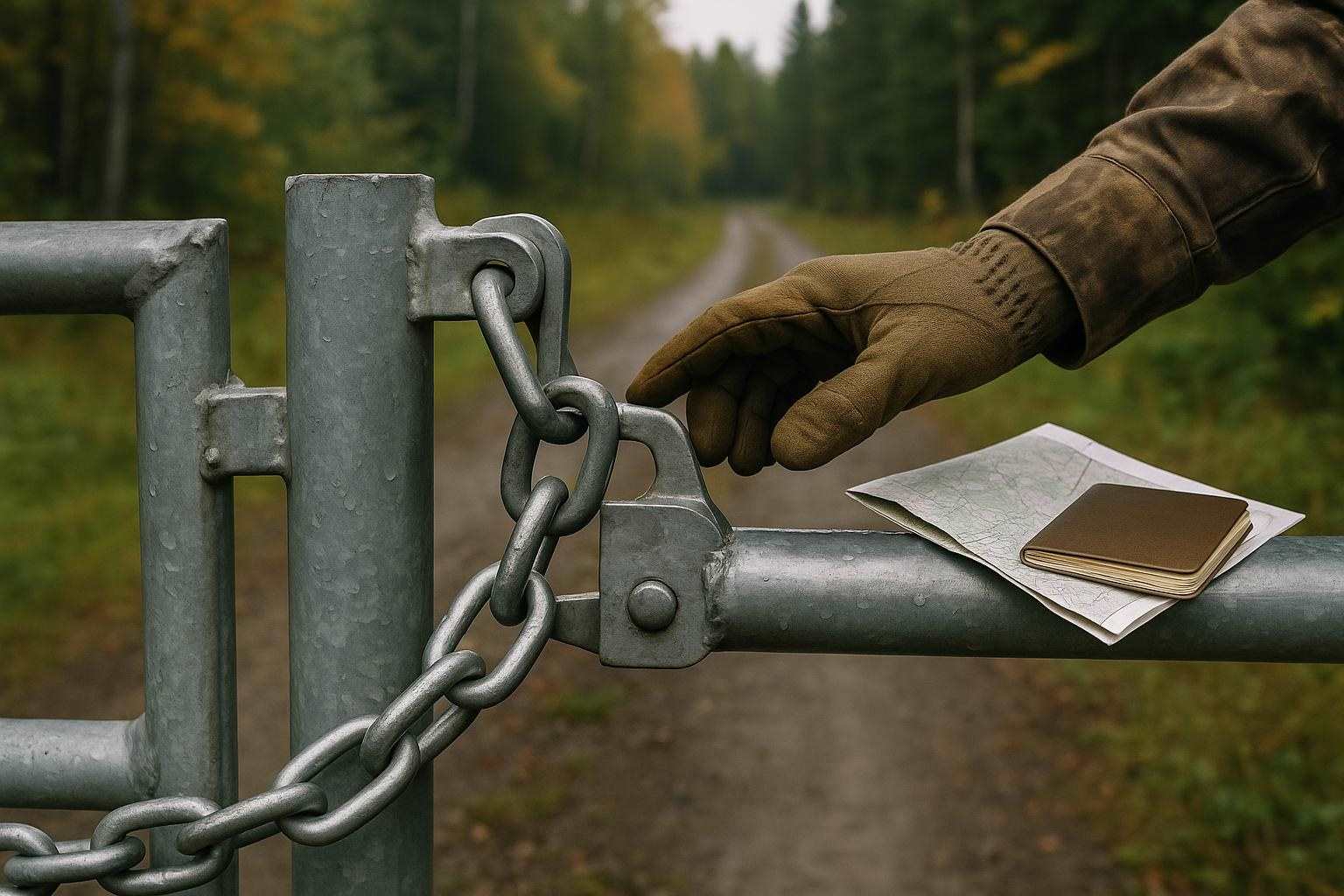
The Gate Is Part of the Hunt: A Public-Land Access Check for Changing Seasons
Smooth Sailing to Your Next Public Land Hunt
Get Informed Before You Head Out
A successful hunting trip doesn't begin when you put on your gear. It starts before that with careful planning. One of the important parts of that planning is understanding how to access the land you want to hunt. A simple metal gate can stop your progress in its tracks. Turn what should be an exciting day into a frustrating one. A road that looks open on a map might be blocked due to weather or rules. You might be driving down a path that seems perfect only to find it's not allowed. That's why knowing your access routes ahead of time makes a difference. It improves your experience. Helps protect the wildlife and the land.
Know the Rules of the Land
Getting a hunting license is important. It doesn't give you the right to go anywhere on public land. Every area has its rules about how you can get in. Some places have road closures. Some allow vehicles at certain times. Others require permits especially if the land borders private property or is managed by different groups. These rules can change even after maps are printed. So always double-check your access information. Keep a printed copy with you. Don't rely only on what's online. If you're unsure call the land management office. Don't assume a gate you've used in seasons is open now. Gates can be locked depending on the time of year. Be ready to change your parking spot or your route based on what you find.
Have a Backup Plan
When you plan your trip don't rely on one way in. Always have a plan. You might think you know the road to take but it could be blocked. That's why it's smart to know a few routes to your destination. Study the maps. Learn the roads around the area. Look for hazards like creek crossings or soft ground that can be dangerous. The closest access point might not be the best choice. Pick a route that gives you the chance to get back safely especially if you're hunting in low light. Consider how much traffic is on the roads and how heavy your gear is. A long hike with a backpack can be tough. Use maps-the digital ones are helpful. Don't trust them completely. Cell service can fail in spots. Always have a paper map as a backup.
Respect Access Points and Private Land
Using land comes with responsibility. Be respectful of the access points. When you unload your gear don't block gates, narrow roads or entrances. Keep the area clear. It helps land managers. Makes it easier for emergency responders. It also helps people who are enjoying the outdoors. If you don't know where to park look for a designated spot. Don't just guess. You could end up parking in a place that's not allowed. Watch for property lines. Fences might be out of date. GPS can be off. If you're not sure where the line is, don't cross it. You don't want to trespass. Don't touch anything that's n't yours-no gates, no equipment, no game. If you need to open or close a gate do it carefully. Leave it exactly as you found it unless someone tells you to do
Gear Up for the Journey
The way you get to your hunting spot will influence what gear you need. If your hike is short a smaller pack might be enough.. If the road is rough or the trail is long you'll need to carry less weight. Don't make your trip harder than it needs to be. Bring a map, enough water for the weather a working phone or radio and safety gear. Check everything before you leave. Make sure your backpack straps work your shoes are secure. Your battery is charged. A small oversight can turn a trip into a bad one.
Don't forget your vehicle. Make sure it's ready for the trip. Check that you have fuel for the trip and the return. Make sure you're parked in a spot. Some areas don't allow parking in places. Parking in the spot can damage your vehicle or get you into trouble.
Your Departure Checklist
Before you leave write down a checklist. This helps you stay focused and remember things. Here's what to include:
- Check the season rules. Are certain firearms allowed? What game is in season? Are there access rules?
- Look at the borders of the land. Find out where you can park. Check if roads have changed or closed.
- Plan your route. Make a plan and at least one backup. Note your expected return time.
- Download maps for use. Charge your phone and radio.
- Check the weather. Bring water and clothes that match the forecast.
- Tell a friend where you're going. Give them your location, vehicle details. When you expect to be back.
Sometimes things don't go as planned. You might find a road closed.. That doesn't mean you have to cancel your hunt. Instead use it as a chance to change your plan. Being flexible and ready to try a route can make the difference, between a failure and a success. Access planning is often overlooked,. It's one of the most important parts of hunting. Take your time. Plan carefully. Be aware of your surroundings. When you do you'll have an experience and create memories that last.
Read More