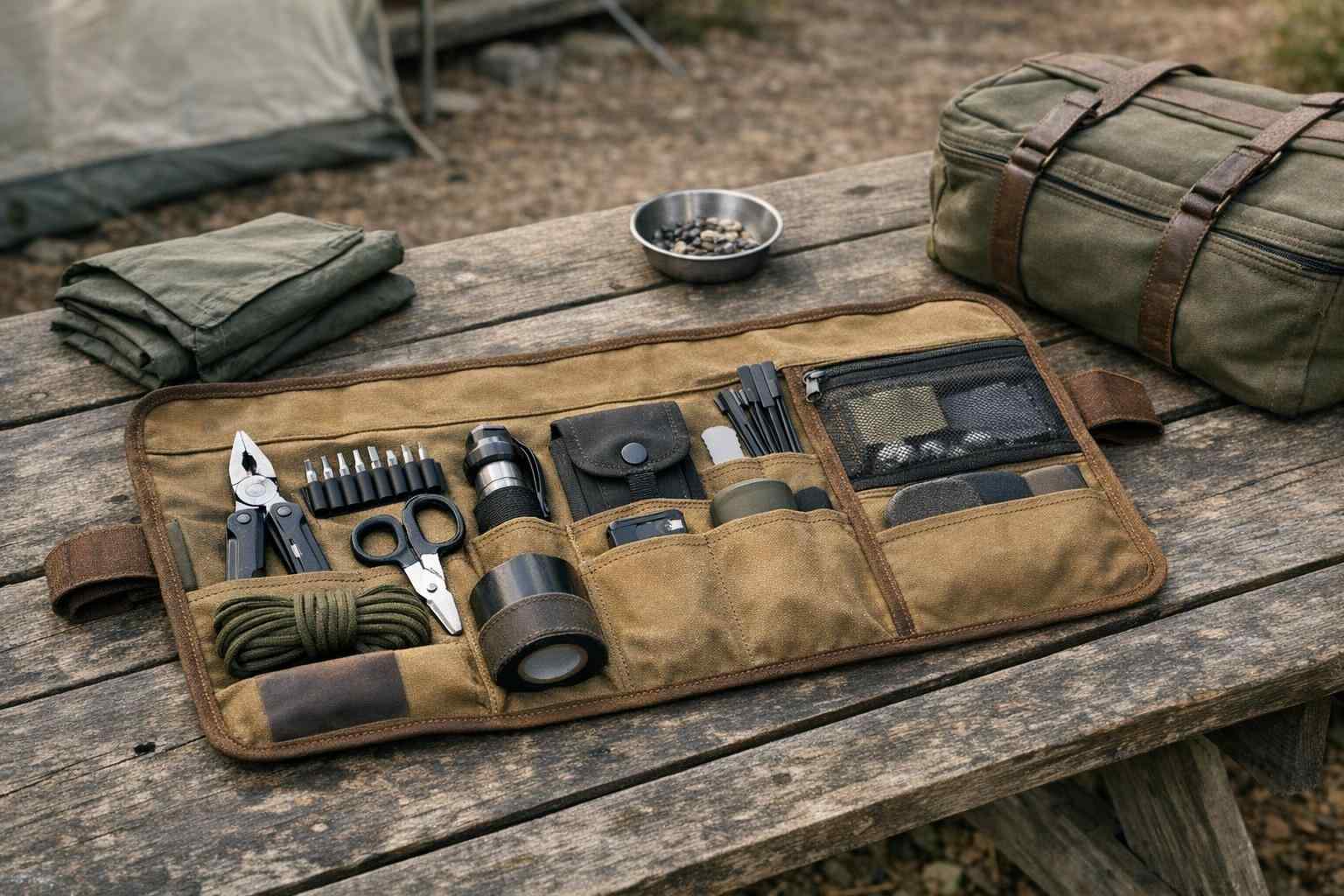
Keeping a Camp Tool Roll Organized for Ordinary Maintenance Jobs
This stuff happens. A loose guyline, a bent stove latch or a screw coming loose from a camp chair can really put a damper on your evening. A small, well-organized collection of tools and parts can stave off the need for inferior repairs to expensive gear and, as an added benefit, prevent clutzy accidents with things like tie-downs for the tent. Late season hunting camp? A rain flap that comes loose after setting up camp is a great test case for figuring out which tools to bring and how to organize them so that they don't get lost.
Start with the Repairs Camp Actually Produces
A loose rain flap is a good test case for the Repairs Camp. It can be easily repaired with a compact bit driver, some pliers, scissors, a length of cord, a few fasteners and some means to secure the edge of the flap until the weather clears. Note that this does not require a full set of wrenches.
Design your repair tools around the common things you take on trips and the things that get used over and over again. These might include things like the stakes for your tent, the clamps for your stove, the wire for your lanterns, the repairs for your pack straps, the plugs for your coolers, the saw for cutting branches, the nails or screws for building chairs, and the containers for storing all your other gear. See how many of these things use the same types of fasteners.
In the case of small parts such as these, they should be stored in separate section(s) from the repair tools. In the case of the repair tools described above, these would be stored in one section of the roll (e.g. top of the roll) and the consumables (e.g. repair materials listed above) would be stored in a separate section (e.g. the bottom of the roll, in a zipped or buttoned pocket).
Give Every Item a Stable Place
Tools to be used frequently should be placed in the outer pockets of the roll, i.e. the pockets that are easiest to open. Sharp edges must be covered, while heavier metal tools should be placed below the center point of the roll so that it remains balanced when carried around.
By keeping the same types of tools in the same type of pocket every time you pack the tool roll, you can ensure that the tool you need will always return to the same sleeve. This makes it easy to notice if a tool is missing. In addition, the types of tools that are typically used for repairs should be stored in the repair section of the tool roll.
Leave a little room in the roll. Be able to pull the roll shut with all the contents still inside, but don't overstuff it. Having a little space between items means that if you're forced to pull the roll open to find a tool while camping, you can remove one item at a time rather than having them all spill out.
Choose Materials That Tolerate Camp Conditions
The field toolkit for repairs is generally exposed to lots of dirt, very wet and cold hands, to rain and sometimes even to sap. The organizing container for these repairs should be easy to clean and/or to wipe with a cloth. Special attention should be paid to the closures in order to not have them come open while being in use. In this case a tough fabric roll would be better for mixed tools, and a hardcase would be ideal for fine tools and small parts which need to stay dry.
Whether you store your field maintenance tools in the truck box, in an external compartment of your pack, or in the cabin or wall tent where you will be spending most of your time, consideration must be given to storage in order to maintain tool usability. Naturally, in harsh weather the waterproof storage of wet tools is also important to prevent corrosion. However, do not seal your damp tools up in a waterproof sack and then forget about them.
Keep blades, saws and awls sheathed as you would store them in your pack for the field. Test the sheath to ensure that it will remain attached to the tool roll when lifted and won't allow the point to penetrate the fabric.
Use the Roll During a Real Camp Repair
Return to the loose rain flap. Before you can fix a problem, you need to have diagnosed the problem. A loose flap is a simple fix, but does it need tape or does it need the repair of the cord, the buckle or the fasteners? This needs to be worked out and, because you are in the field, the repair needs to be better than temporary.
Make sure the ground where you will be making the repair is clean, clear of debris and can support the tool roll without it being damaged. Organize any removed parts such as screws, bolts, clips, etc. in a cup, on a magnetic tray, or zipped parts pocket. If you are working with equipment that has the potential to cause damage such as a stove, fuel, cutters, etc. make sure to follow the manufacturer's instructions for repair. Also be sure to allow for time for any parts to cool off prior to starting repair.
Be honest with what kind of temporary fix you are using. That strip of tape or that spare piece of cord can get you through the trip. And then mark that item in your trip notebook or on your phone to be replaced at home. These kinds of repairs tend to get left till they fail again.
Inspect, Refill, and Reset Before Storage
Wipe the tools clean after the repair to get rid of dirt and moisture. Look for bruised jaws, bent or broken bit tips, loose handles and torn pockets. The cutting edges need to be sharpened and kept in working order. The sharper the better but be aware that very sharp blades are even more hazardous in the campsite than blunt ones.
Add items that need to be restocked for your kit in a list on the inside of the roll, such as cord, tape, patches, etc. as well as spare batteries for any lighting tools that may be included. Note any unusual fasteners for specific pieces of gear. Replace these items before storing the rest of your camp equipment for your next trip.
Clean up small bits of repair materials in the campsite, such as clipped cord, broken plastic parts, wire ends, tape remnants, etc. Also pick up any failed hardware parts that could cause problems or be of interest to animals or other humans.
An organized camp tool roll is not a mini workshop for all the little fixes you might need to do on a trip. It is a field maintenance kit for the repairs that actually do happen. When the gear in the roll is the same as the repairs needed for the gear in your pack then the repairs are small, they are seen for what they are and managed accordingly.
Read More